Featured
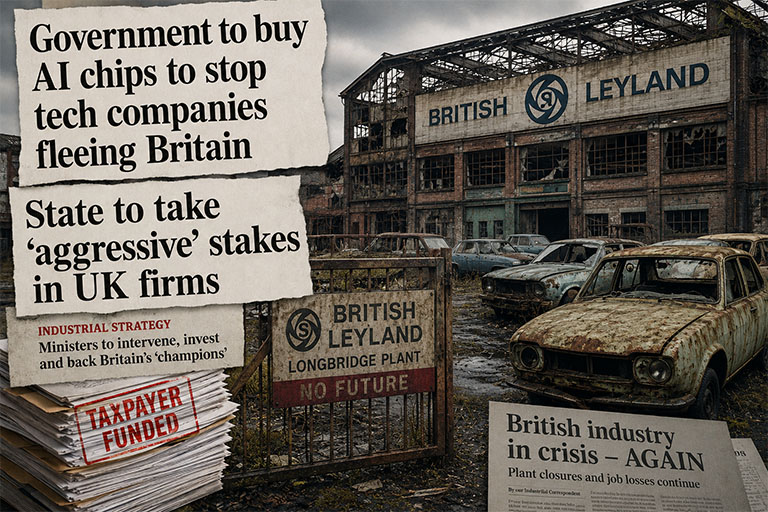
Back to the Future IV: Return of British Leyland
Whitehall wants to run industry again. What could possibly go wrong?

Whitehall wants to run industry again. What could possibly go wrong?

Capitalism is often portrayed as a modern invention imposed upon society by financiers and corporations. In reality, it is simply the natural extension of ordinary human behaviour: specialisation, cooperation and voluntary exchange. From a Neolithic tribesman trading a stone axe for two fish to the complex global markets of today, free exchange has always allowed individuals to coordinate knowledge, allocate resources and improve living standards more effectively than central planning ever could.

Britain has built far more than a housing market. It has built an entire economic model upon ever-rising property values. As house prices soared, politicians congratulated themselves on “growth”, homeowners refinanced, banks expanded lending and the country consumed against paper wealth. But property prices cannot indefinitely outgrow purchasing power. Now, with transactions slowing and affordability breaking down, Britain is beginning to discover what happens when an economy built on asset inflation starts running out of road.

Bond markets are not political activists waiting to applaud “progressive policies”. They are lenders deciding whether Britain looks financially stable. Labour’s growing belief that markets should simply “fall into line” reveals the same dangerous arrogance that brought down Liz Truss — only this time from the Left.